When Should You Consult a Child Psychologist? 10 Signs Parents Should Know

EchoSoul
5 min read
When Should You Consult a Child Psychologist? 10 Signs Parents Should Know
Children go through a lot of changes during their development process, but all changes in emotions and behavior do not necessarily indicate a problem. Nonetheless, when a change becomes persistent, becomes very intense, and starts impacting school work, personal relationships, sleep, or day-to-day activities, getting some professional advice might be beneficial.
The help of a child psychologist will aid parents in getting an idea about the cause of emotional and behavioral issues and give some suggestions according to the age of the child.
Indications That Your Child Needs Professional Help
Learning how to recognize if your child needs professional help can be beneficial for parents. All children develop at different speeds, but ongoing emotional, behavioral, social, or academic changes can mean that additional help may be needed.

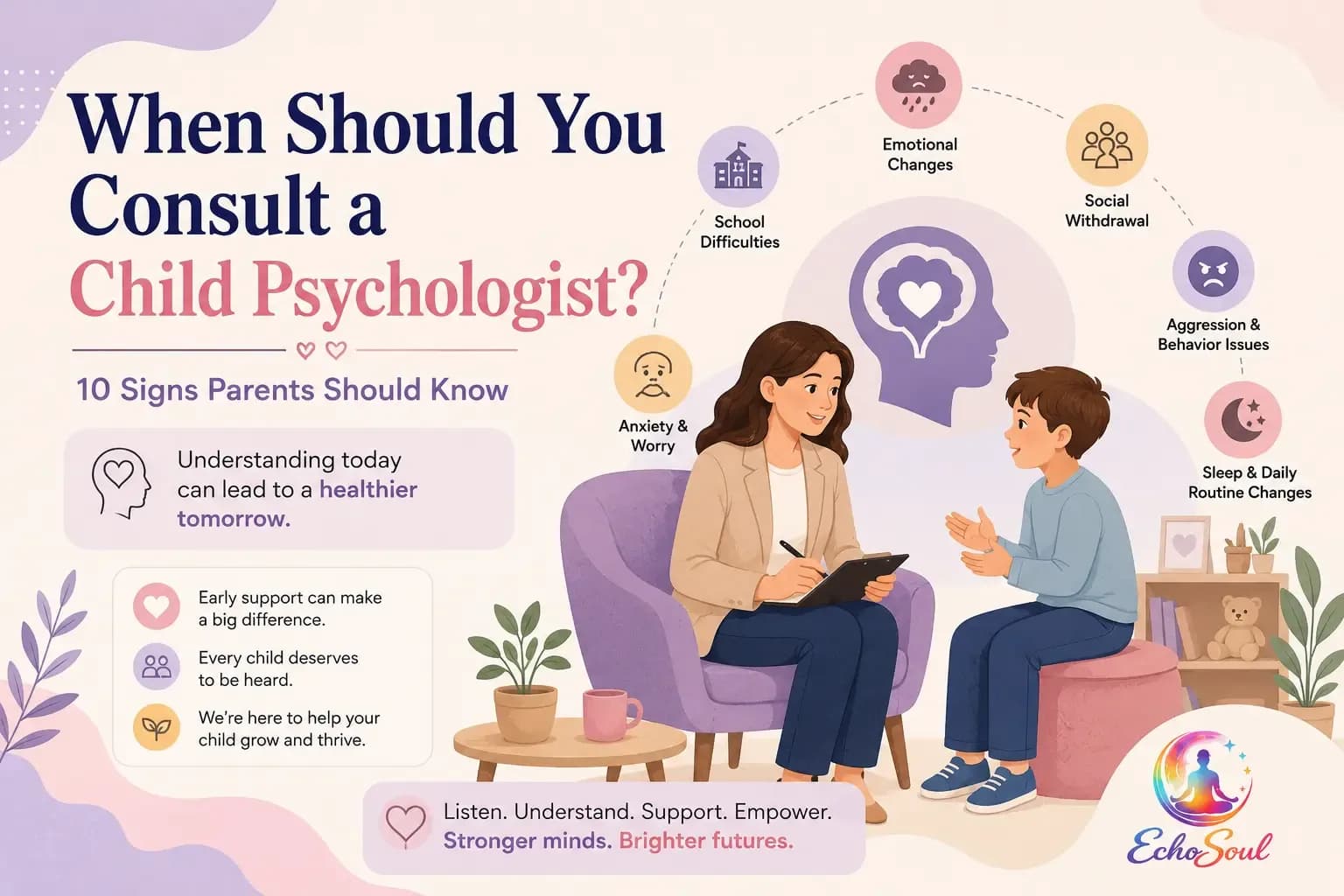
1. Frequent or Intense Emotional Outbursts
Frequent mood swings and outbursts are part of being a child. But excessive crying, anger, frustration, or any emotional responses that seem to be hard to control may require your concern.
A child psychologist could help determine the triggers and comprehend the emotions that a child is trying to communicate through behavior. The main objective here is not to just get rid of the behavior.
2. Sudden Changes in Behavior
Parents usually observe a shift in behavior in a very active and sociable child who all of a sudden withdraws or becomes angry and irritable.
Any major change in behavior might be associated with problems at school, at home, in social situations, due to stress or any emotional issues. Child counseling creates a safe space for kids to express themselves in an appropriate way.
3. Difficulties at School
Difficulties that could include poor academic achievement, problems paying attention, avoiding school, problems with other children at school, or complaining about school could impact a child’s self-respect and self-esteem.
Rather than just focusing on the academic outcome, parents could consider what is causing the problem. A child behavioral therapist could assist children with more appropriate behavior management techniques, communication skills, and dealing with difficult situations.
4. Ongoing Anxiety or Excessive Worry
Children can feel anxious because of exams, relationships, being away from parents, and novel experiences. When the anxiety is frequent enough or starts to affect their daily lives, professional help might be beneficial.
A child psychologist will help the parents understand the nature of the problem and educate the children how to cope with negative feelings.
5. Social Withdrawal or Difficulty Making Friends
While some children tend to favor small social circles, others enjoy having company. A significant change in social behavior should be taken seriously, especially when a child does not participate in any activities, make friends, or communicate with others.
Children have the chance to share their emotions and build their social skills through child counseling.
6. Frequent Aggression or Challenging Behaviors
Behaviors such as hitting, yelling, breaking objects, defiance, or any other disruptive actions can be hard for parents to deal with. It is possible that punishment will not necessarily help with the root cause of the behaviors.
It is possible for a child behavioral therapist to help identify the triggers, as well as patterns of behavior, and to come up with alternative responses.
7. Changes in Sleep or Daily Routine
Troubled sleep patterns, recurring nightmares, alterations in eating behaviors, and disruptions to regular activities may sometimes be signs that emotional strain is affecting a child.
Such signs need to be assessed in relation to the child’s behavior and situation. If problems persist, expert advice can assist parents in determining if further intervention may be needed.
8. Low Confidence or Negative Self-Talk
These children are likely to be self-critical in case of academic challenges, relationship issues, or family challenges. The phrases “I can do nothing” or “No one loves me” have to be considered seriously.
The involvement of a child psychologist is important to enable children to gain better emotional awareness, confidence, and coping mechanisms for the parents’ benefit.
9. Difficulty Coping With Major Life Changes
New City, school transfers, parental breakup, death of a loved one, or changes in the family are tough on children.
Children are sometimes unable to find appropriate language to describe the effects that such events have on their lives. Child counseling can be an opportunity for children to talk about their feelings and learn how to cope with changes.
10. When Parents Feel Unsure About What to Do
Parents don't have to wait until the situation becomes serious to get professional advice. At times, the greatest indication is just having that doubt on how to react to changes in their child's emotional or behavioral pattern.
A child behavioral therapist will give you concrete ways of dealing with your particular behavioral issue, although other professionals might look at a much broader spectrum of needs of your child.

When Should Parents Seek Professional Support?
There isn’t any one guideline that says when a child requires professional help. If the problem persists, causes distress, affects functioning or despite attempts to be supportive at home continues to persist then you should consider getting professional guidance.
Seeking professional evaluation would allow parents to have some understanding about the issue and not just assumptions or comparisons with other children. Early intervention could help the family to plan appropriately too.
How EchoSoul Can Support Your Child
We at EchoSoul know that each child is an individual whose personality type, surroundings, development level, and manner of displaying his/her emotions is unique. That is why our practice relies on listening and understanding the child's conditions as well as individual support.
EchoSoul professionals can help parents in dealing with their children's emotional and behavioral issues by following an understanding and respectful procedure that would depend on the issue and might include child counseling, behavioral coaching, parenting techniques, or making referrals for further consultation with other professionals.
What we seek when we ask for help is not to put labels on the child but to better understand him/her and assist in improving his/her coping and communication skills.